BLOG | What AI Can't Do When Your Systems Go Down
It's 4 a.m. and an alert just woke you up. Something critical is down. For a small business or non-profit, one critical system going down can quickly disrupt your staff, customers, clients or community services.
The AI monitoring tool you invested in may catch the issue fast and do its job well. But for small teams and community-focused organisations, what happens next matters more than how quickly the alert arrives. And that's the part many Tasmanian businesses and non-profits haven't fully prepared for.
Modern monitoring tools are remarkably good at spotting trouble. They identify unusual activity, surface problems early and notify the right people faster than ever before. What they can't do is restore your data, rebuild your systems or help your team keep serving customers, clients, members or the community.
That's where a tested safety net becomes invaluable. The alert tells you something is wrong, but your ability to recover depends on what you've put in place before that alert arrives.
Detection and recovery are not the same thing
Many small businesses and non-profits spend money on tools that tell them when something is wrong. Recovery planning often gets much less attention, even though Tasmania faces real-world disruptions ranging from cyber incidents to storms, floods, bushfires and service outages.
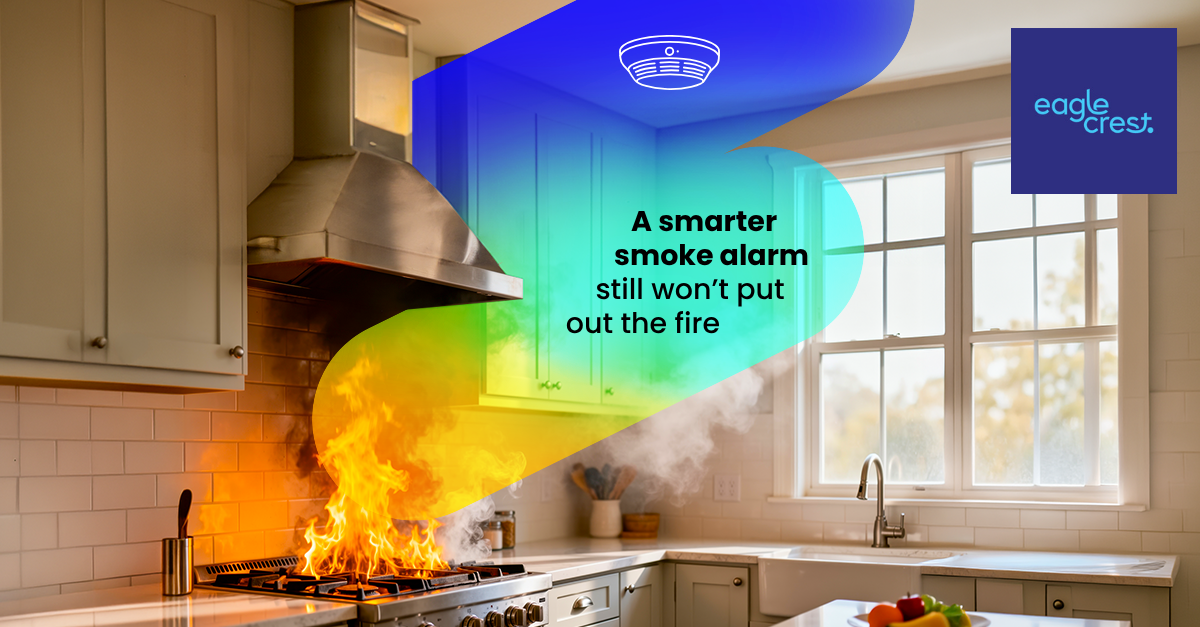
Think of this like a fire alarm. A fire alarm will alert you to danger, but it won’t extinguish or prevent the fire. It can't protect your building or belongings or get people to safety.
It does, however, give you time. But whether the incident is contained or spreads depends on the preparation and safeguards you already have in place.
Similarly, AI monitoring can tell you a server is down, flag unusual activity or alert you to a failed backup. What it can't do is reduce the cost of lost productivity, protect grant-funded programs or help staff and volunteers know what to do while they wait for direction.
For a small business or non-profit in Tasmania, what happens after the alert often comes down to one thing: how quickly you can recover and keep delivering the services people rely on.
Your real safety net
If you run a small business or non-profit, you already know disruptions are inevitable. It's not a question of if they'll happen, but when.
The organisations that recover quickly aren't always the ones with the most expensive or sophisticated tools. They're the ones that knew exactly what to do the moment something went wrong.
Two local organisations hit by the same cyberattack or outage on the same day can have completely different outcomes. One spends three days trying to figure out what to do while the other is back online within hours.
The difference? One had a documented playbook that spelled out every step: who’s responsible, what needs to happen, and the exact sequence for recovery. They practiced it, failed during a test, learned what broke and fixed it. When the real incident hit, they were executing a plan, not inventing one.
That’s what a tested recovery plan looks like in practice. It’s a living, proven process that your staff and volunteers know how to follow under pressure, not a set-it-and-forget-it document that sits on a shelf.
How prepared are you? Ask yourself these questions
Remember that 4 a.m. alert? Once that notification arrives, the answers to these questions separate a quick recovery from a long and costly disruption to your customers, clients, members or community services:
• When did we last test our backups and did the restore work?
• If something went wrong today, how long would recovery take?
• Does everyone know their role if a critical system goes down, including staff, contractors and key volunteers?
• Are we confident our backups would work if we needed them right now?
• If a disruption happened today, could we get our team back to work within a timeframe our business, funding obligations or community commitments could live with?
How we help
Your AI monitoring tool alerts you when something breaks. What it can't tell you is whether you're ready to recover.
That's where we come in. We work with Tasmanian small businesses and non-profits to test backups, validate recovery processes and identify gaps before they become costly interruptions.
Many organisations discover their backups are incomplete, outdated or difficult to restore when they test them properly for the first time. Better to learn that in a controlled test than during a crisis.
When something goes wrong, you want a plan that's already been tested and proven to work.
You’re probably not as prepared as you think you are
Here's the truth: if you’re like many small businesses and non-profits, you probably haven't tested your full recovery plan. Recovery testing gets pushed down the priority list because systems are running fine right now and the day-to-day work feels more urgent.
The good news is that the gap is fixable, and it doesn't require a massive overhaul.
A smarter alarm is worth something only if you're ready for what comes after it fires.
ACTION Item(s)
Email us from our contact us page if you would like to know more.
We would strongly recommend you and your board starting the process to understand the SMB1001 framework.
Subscribe below for our weekly e-newsletter to help educate yourself or someone that you know is struggling in this area