BLOG | More Tools Won’t Fix Your Weak Security
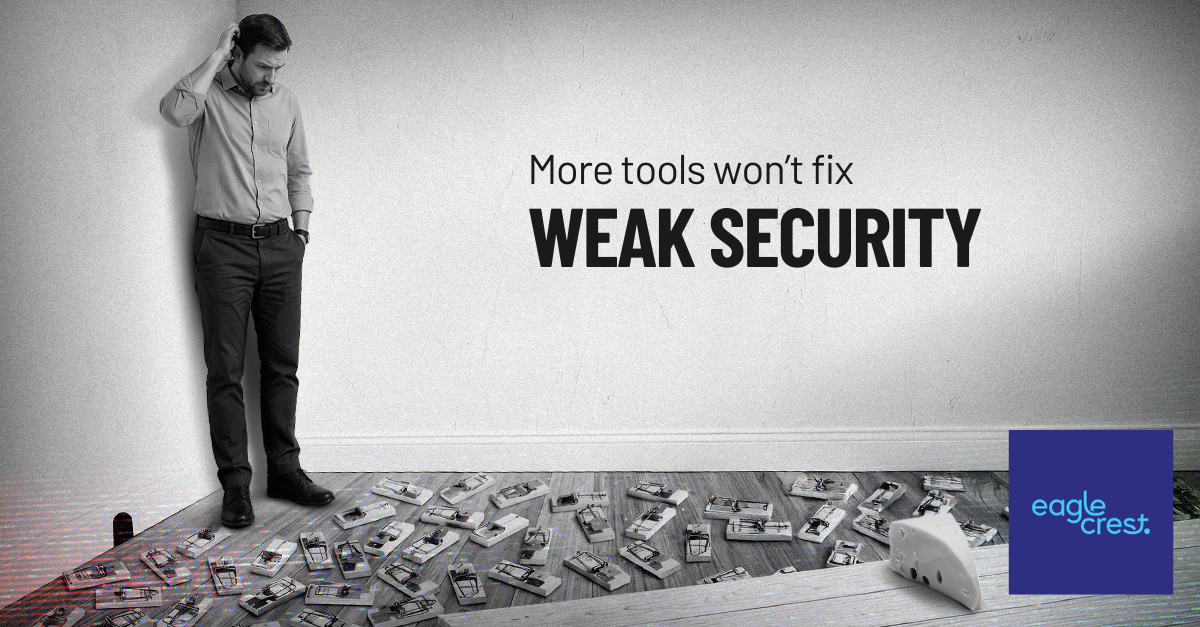
Buying another cybersecurity tool can feel like added protection for your Tasmanian small business or not-for-profit organization.
The problem starts when those tools build up without a clear plan. What once felt reassuring can become difficult to manage, easy to misunderstand and costly to maintain, especially when your time, budget and internal IT resources are limited.
Before adding another product, consider four ways too many tools can make security harder for a small team.
1. More tools create more complexity
Most crowded security setups begin with sensible decisions. You add one tool for email security, another for device protection, another for backups and another for access control. Each purchase addresses a genuine concern.
Months later, no one has a clear view of how everything fits together. Staff may need to move between dashboards, check separate reports, track renewals and remember which tool covers each risk. For a small business or community organization, that can take valuable time away from customers, members and essential services.
This slows down security work and makes gaps harder to identify. If you cannot quickly see how your tools support one another, weaknesses may remain unnoticed and put your operations, reputation and finances at risk.
2. Too many alerts can hide real threats
Alerts are useful only when someone has the time and knowledge to review, prioritize and act on them.
When every security tool sends separate notifications, a small team can quickly become overwhelmed. Some alerts reflect normal activity, some need review and others signal a genuine threat. The challenge is identifying the important ones before an issue spreads.
This is where alert fatigue becomes dangerous. When staff are already balancing several responsibilities, a suspicious sign-in, unusual file transfer or malware warning can be missed because it looks like one more item in a crowded list.
3. Overlapping software wastes time and money
An overcrowded security stack can hide duplicate spending. You may be paying for several products that perform similar functions, including features already available in software you use every day.
For Tasmanian small businesses and not-for-profits, every subscription needs to deliver value. Overlap affects both your budget and the people managing security, who must review multiple tools, compare reports and decide which product should handle each task.
During an incident, this confusion can waste critical time. If two tools show different results, you may need to work out which one to trust before taking action.
4. Misconfigured tools can leave security gaps
A cybersecurity tool does not protect your organization simply because you bought it. It must be set up correctly, kept up to date and configured to monitor the right people, devices and systems.
This is where small teams can lose ground without realizing it. A security feature may be switched off during troubleshooting and not turned back on. A tool configured for your original staff may not be updated when employees, volunteers, contractors or devices are added.
These gaps do not appear on an invoice. The subscription is paid and the tool appears active, but the protection may not match your current needs. The risk is not always buying the wrong tool. It is relying on a tool that has not been configured or reviewed properly.
Strategy always beats quantity
Better security is not about buying more software. It is about making sure your existing tools work together, are configured correctly and support a practical security plan that suits your organization, budget and level of risk.
Start by identifying the information, services and systems you cannot afford to lose. Consider where a cyber incident could cause the greatest disruption, then check which controls already protect those areas. From there, decide which tools support your plan, and which ones add cost or unnecessary noise.
Think of your security tools like a small team. Adding more people without clear roles does not improve performance. Better results come from giving each person a purpose, removing confusion and making sure everyone works towards the same goal.
The best security stack is not the biggest one. It is the one where every tool has a clear purpose and delivers value.
Ready to simplify your organization’s security?
We help Tasmanian small businesses and not-for-profits review their security tools, remove unnecessary complexity and make sure their protection works together.
ACTION Item(s)
Email us from our contact us page if you would like to know more.
We would strongly recommend you and your board starting the process to understand the SMB1001 framework.
Subscribe below for our weekly e-newsletter to help educate yourself or someone that you know is struggling in this area