BLOG | Don’t Automate Chaos: Preparing Your Systems for AI
AI Is Everywhere — But Is Your Organisation Ready for It?
AI is everywhere right now, and the pressure to “do something with it” is real. For non‑profits and small businesses, the conversation often starts with tools and features.
The more important question is more basic:
Is your organisation actually ready for AI?
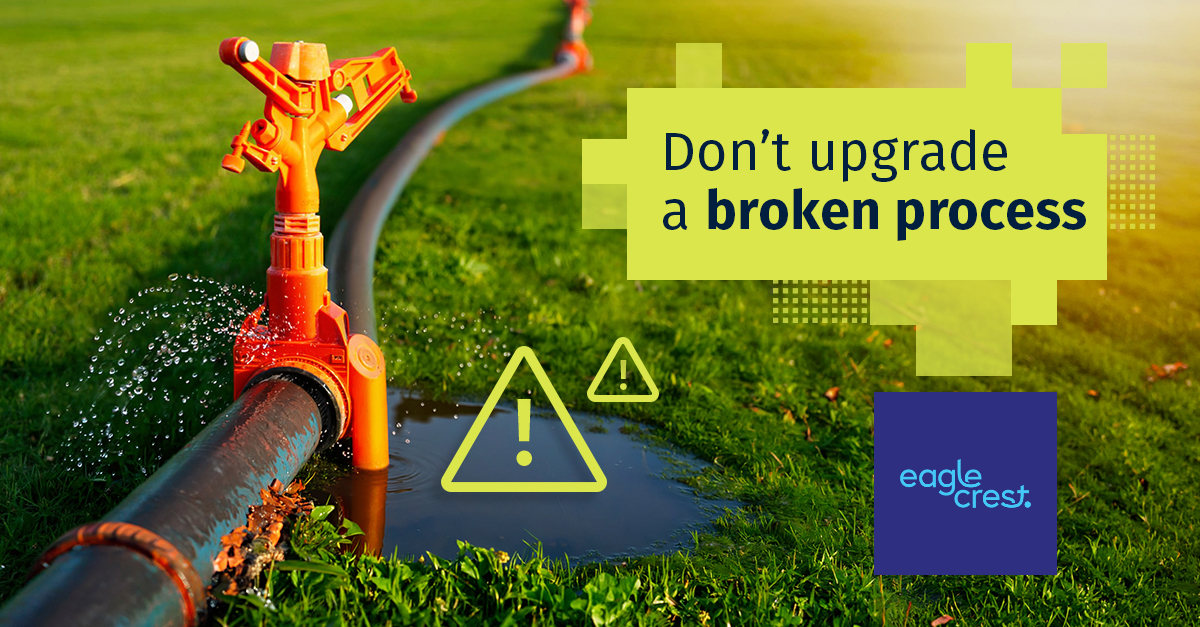
AI works best in organisations that are already reasonably organised. It doesn’t fix messy systems, unclear processes, or inconsistent data. It runs on whatever foundation is already there — and if that foundation has cracks, AI will expose them faster than anything else.
Before deciding where AI fits, it helps to clearly understand what AI does well, where it tends to go wrong, and what needs to be in place for it to genuinely add value.
What AI Can — and Can’t — Do
Used well, AI helps organisations do more with the people and resources they already have.
For non‑profits and small businesses, this often means:
Reducing repetitive admin work
Drafting routine emails, reports, or documentation
Summarising information and spotting patterns in data
Cutting down on manual hand‑offs between systems
When teams are small, even modest time savings have an outsized impact.
What AI can’t do is fix organisational disorder.
AI doesn’t know your mission, priorities, or constraints. It doesn’t understand context the way your staff and volunteers do. And it doesn’t decide what’s important — it simply works within the structure you give it.
AI amplifies your systems. It doesn’t organise them.
What Happens When You Automate Chaos
When AI is layered onto an organisation that isn’t ready, the problems aren’t dramatic — they’re subtle.
Things don’t break. They just get harder to manage.
In practice, that often looks like:
AI pulling from inconsistent or duplicate data and producing outputs no one fully trusts
AI tools added on top of an already crowded and overlapping software stack
Staff or volunteers adopting AI tools independently, with no shared guidance (often called shadow AI)
Sensitive information flowing through AI systems without clear rules or oversight
The result isn’t disaster. It’s friction:
Conflicting versions of information
More complexity instead of less
Security and privacy exposure
A growing list of subscriptions nobody has time to review
These are distractions — but distractions running at the speed of automation are expensive.
Signs Your Organisation Isn’t Ready for AI Yet
AI readiness has nothing to do with size or budget. Small, well‑run organisations are often better positioned than larger, messier ones.
You may want to slow down if:
You haven’t reviewed your software tools in over a year
Staff or volunteers regularly rely on spreadsheets outside your main systems
Multiple platforms handle similar tasks without a clear reason
User access and permissions haven’t been reviewed recently
You’re unsure which features in your current tools are actually being used
Manual workarounds have quietly become “the way things are done”
If systems aren’t aligned, AI won’t fix the inefficiencies — it will accelerate them.
What Getting Ready for AI Actually Looks Like
Preparing for AI doesn’t require a major project or large upfront investment. It starts with clarity.
In practical terms, readiness means:
Mapping key workflows so you understand where automation would genuinely reduce effort
Ensuring tools reflect how your organisation works now, not how it worked years ago
Removing redundant systems that create confusion about where information lives
Cleaning up access and permissions so the right people have the right level of access
Organising data so AI has reliable, consistent inputs
Reviewing existing platform features you’re already paying for but not using
AI performs best in environments with structure and consistency. Organisations that benefit most from AI already have their operational foundations in order.
A Smarter Approach to AI Adoption
Effective AI adoption isn’t about rushing to enable the latest feature. It’s about being deliberate — just like any other operational decision.
The organisations that do this well tend to:
Take stock of current systems and processes
Identify specific, measurable problems AI could help solve
Recognise where AI would create complexity rather than value
Address security, privacy, and governance before automation goes live
A technology performance review is often the most practical starting point.
It’s not a commitment to rollout or replacement. It’s a readiness check — a way to understand where things are aligned, where they aren’t, and what needs attention before AI can genuinely help.
No forced upgrades.
No hype‑driven implementation.
Just a clear view of what makes sense next.
What Success Looks Like When You Get It Right
When AI is introduced into an organisation with solid systems and well‑defined workflows, the benefits are sustainable rather than short‑lived.
Productivity gains are real because inputs are clean and consistent
Repetitive work decreases without creating confusion
Insights can be trusted because data is organised and up to date
Risk remains manageable because governance was considered early
Growth becomes easier because the foundation can support it
The smartest AI strategy isn’t about moving fast.
It’s about building something solid enough to build on.
Build the Foundation Before You Build on Top of It
AI can make a real difference for non‑profits and small businesses — but only when it’s enhancing something that already works, not compensating for structure that never existed.
The organisations that benefit most from AI are the ones willing to pause, assess where they stand, and strengthen their foundation first.
That’s not a reason to avoid AI.
It’s a reason to start in the right place.
Schedule a technology performance review to assess your AI readiness and make sure your systems are prepared before you start building on top of them.
ACTION Item(s)
Email us from our contact us page if you would like to know more.
We would strongly recommend you and your board starting the process to understand the SMB1001 framework.
Subscribe below for our weekly e-newsletter to help educate yourself or someone that you know is struggling in this