BLOG | The ROI of Decluttering Your Tech
Finding better value from your technology: A smarter approach for Tasmanian nonprofits and small businesses
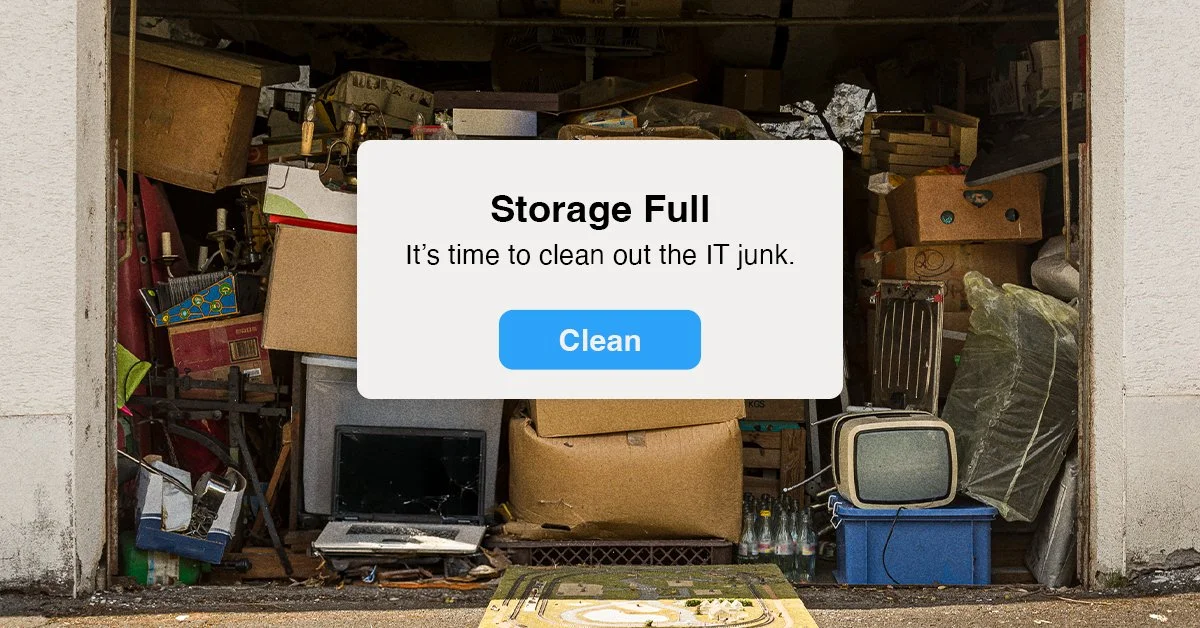
You’re getting ready for an event — maybe a fundraiser, a community meeting, or a client presentation — and you want that one jacket that always works.
But when you open the cupboard, you can’t find it. It’s buried under everything else.
So you do what feels easiest: you get another jacket.
It solves the immediate problem, but it doesn’t fix what caused it — too much clutter.
For many nonprofits and small businesses across Tasmania, technology works the same way.
When adding more doesn’t mean getting more value
When things feel slow or inefficient, the natural response is to look for something new:
another tool
another platform
another system that promises to fix the problem
The assumption is simple: more capability should lead to better outcomes.
But over time, technology builds up just like that cupboard. Every tool made sense when it was introduced, and most still “work,” so nothing gets removed.
From the outside, everything looks well-equipped.
On the inside, it feels harder than it should.
Teams spend time figuring out where things belong, switching between systems, and dealing with small inefficiencies that add up throughout the day.
For organisations with limited time, funding, and staff, that hidden complexity matters.
Sometimes the best return isn’t in adding something new — it’s in simplifying what you already have.
Why simplifying technology delivers real value
Technology clutter rarely causes obvious failures. Instead, it creates small, constant friction:
extra steps in everyday tasks
minor delays and interruptions
uncertainty about which system to use
These issues are easy to overlook but costly over time.
When systems are simplified, work becomes more straightforward:
people know where to go
processes are clearer
issues are easier to spot and fix early
For nonprofits and SMEs, this isn’t just about efficiency — it’s about freeing up time and resources for what matters most, whether that’s serving clients, supporting communities, or growing sustainably.
Where simplifying creates real returns
1. More time for meaningful work
When systems overlap or aren’t clearly defined, staff and volunteers spend time navigating tools instead of doing their core work.
Simplifying removes unnecessary steps and confusion.
Result: More time focused on clients, community outcomes, and priority projects.
2. Better control over costs
It’s common to pay for tools that are underused, duplicated, or no longer needed.
Simplifying your environment helps you:
reduce unnecessary subscriptions
avoid surprise costs
make spending more predictable
Result: Limited budgets go further.
3. Reduced risk and fewer disruptions
When systems are complex, it’s harder to understand how everything connects. Even small changes can feel risky.
A simpler environment makes ownership and dependencies clearer.
Result: Fewer surprises, improved security, and more confidence in day-to-day operations.
4. Stronger foundations for growth
As your organisation grows — more staff, volunteers, clients, or services — complexity increases.
If your systems aren’t clear, growth can feel risky or harder to manage.
Simplifying gives you a clearer foundation to build on.
Result: More confidence when expanding services or scaling operations.
5. Happier, more productive teams
Technology shapes how work feels each day.
When systems are cluttered, frustration builds. People spend energy navigating tools instead of making an impact.
When systems are simple and aligned, work flows more naturally.
Result: Less frustration, better focus, and more engaged teams.
What simplifying your technology really means
Simplifying doesn’t mean replacing everything or starting from scratch.
For most Tasmanian nonprofits and small businesses, it’s about:
reviewing what you already have
removing duplication
organising systems more clearly
retiring tools that no longer add value
Even small changes can make a noticeable difference.
The goal is clarity — not disruption.
Where to start
Just like cleaning out a cupboard, the first step is visibility.
Before adding anything new, take a closer look:
What systems are you currently using?
Which ones overlap?
What’s actually being used day to day?
Where is time being lost?
Many organisations discover that the biggest gains come from simplifying, not adding more.
A smarter way to improve outcomes
For nonprofits and small businesses in Tasmania, getting better value from technology isn’t about having more tools — it’s about having the right ones, working in a clear and organised way.
When you reduce clutter:
time is freed up
costs become clearer
risks are easier to manage
teams can focus on what matters most
And that’s where real return on investment is found — not in what you add, but in what you simplify.
Taking the next step
If you’d like an outside perspective, consider speaking with an IT partner who understands the needs of smaller Tasmanian organisations.
A short conversation can help you identify:
what’s worth keeping
what can be simplified
where you can unlock immediate value
Sometimes, the biggest improvements come from clearing the way — not adding more.
ACTION Item(s)
Email us from our contact us page if you would like to know more.
We would strongly recommend you and your board starting the process to understand the SMB1001 framework.
Subscribe below for our weekly e-newsletter to help educate yourself or someone that you know is struggling in this area.